Search Registry Archive Files for 3478156544, 3274322527, 3389128732, 3519715804, 3292431488

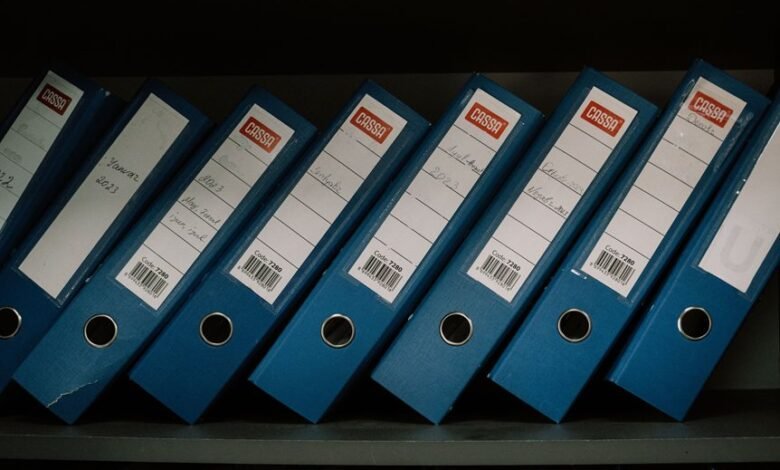
A search registry is a structured tool for locating archive files linked to identifiers. This discussion considers mapping five numeric IDs to their original accession, catalog entry, and metadata to ensure provenance and consistency. A methodical approach highlights techniques for efficient retrieval, cross-archive linking, and audit trails. The objective is to enable rapid discovery while preserving context. The implications for governance and responsible research are significant, and the next step invites careful examination of registry design and traceability.
What Is a Search Registry in Archives?
A search registry in archives is a curated catalog or ledger that records metadata about archival holdings, enabling efficient discovery of materials contained within a repository.
It functions as a governance tool, aligning collection practices with organizational mission.
Its scope supports archival ethics and data stewardship, guiding access, provenance, and preservation decisions while empowering researchers and practitioners to pursue freedom with responsibility.
How to Map the Five Numeric Identifiers to Records
To map the five numeric identifiers to records, an archivist begins by verifying each identifier’s origin and format, ensuring they originate from the search registry and are consistently recorded. The process emphasizes finding provenance and identifying provenance through cross-checking metadata, accession numbers, and catalog entries. Records are matched to their provenance trail, enabling accurate association while preserving archival integrity and contextual clarity.
Techniques for Efficiently Locating Registry Entries
Techniques for efficiently locating registry entries require a structured approach that emphasizes speed, accuracy, and traceability.
Systematic search protocols prioritize minimal traversal and deterministic results, using image based indexing to snapshot registry states and support rapid comparisons.
Cross archive linking to associate related records reduces duplication and accelerates discovery, while maintaining provenance and repeatable steps for verification and auditing.
Real-World Scenarios: Tracing Provenance and Timelines With Registry IDS
Real-world deployments of registry IDS demonstrate how provenance and timelines are reconstructed from archived entries. This disciplined approach enables analysts to map complex changes across systems, isolating unexpected edits and correlations.
Provenance tracing clarifies source credibility, while Timeline reconstruction aligns events with security incidents. The method remains strategic, precise, and adaptable, empowering defenders to pursue freedom through informed, evidence-based responses.
Frequently Asked Questions
Are the IDS Unique Across All Archives or Can Duplicates Exist?
Duplicates may occur across archives; uniqueness is not guaranteed. The system should enforce consistent identifiers, yet unrelated formats and common pitfalls can permit repeats. The approach remains methodical, strategic, precise, aligning with audiences seeking freedom.
Can Unrelated Records Share Similar Registry Formats?
As the question implies, yes: unrelated records can share similar registry formats, revealing cross archive similarity while differing in content. This methodical approach highlights structural parallels, enabling strategic comparisons and freedom through disciplined, precise analysis.
What Are Common Pitfalls When Validating Registry IDS?
Common pitfalls when validating registry ids include treating invalid topics as valid data, overlooking format constraints, and assuming consistency across unrelated formats; a methodical approach mitigates errors, ensuring checks for duplicates, boundaries, and cross-reference integrity.
Do IDS Correlate With Access Permissions or Restrictions?
Ids correlation with access permissions is not guaranteed; systems may enforce access via separate controls. Practitioners should assess access constraints, registry formats, and duplication risks to ensure secure, scalable management without assumptions about inherent correlation.
How Often Are Registry Entries Updated or Deprecated?
Time-based updates occur periodically, with deprecated signals signaling older entries while access permissions may shift. The process remains strategic and precise, noting unrelated formats alongside time-based updates, ensuring freedom-seeking readers understand how registry entries evolve and are deprecated.
Conclusion
A steadfast, systematic scribe searches, sorting, correlating, and confirming registry entries. Each identifier is carefully categorized, cataloged, and cross-checked for consistent, credible provenance. By building a pristine, parallel pathway between accession, catalog, and metadata, the registry yields traceable timelines and transparent trust. Through disciplined diligence, data duplicate danger diminishes, deliberate decisions develop, and documentation stays dependable. The rigorous, resilient registry reveals reliable records, reinforcing responsible research, rigorous results, and repeatable, rational references for researchers.