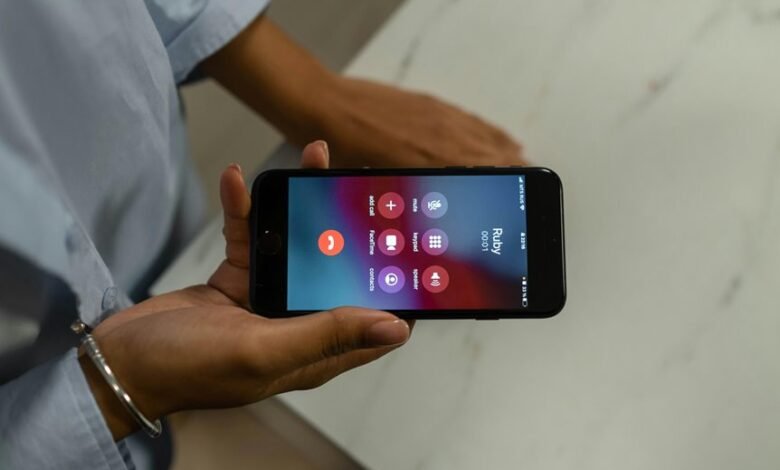
The discussion centers on Contact Finder’s claimed ability to reveal verified caller signals by integrating carrier IDs, call patterns, and history reports. It frames a real-time assessment that generates a confidence score to inform dialing choices. The approach emphasizes data cross-checks and transparency, yet questions remain about accuracy, privacy, and practical limits. Readers are cautioned to assess risks and benefits as they consider the method’s role in safer, faster connectivity. The question remains: how robust are these signals in varied scenarios?
What Verified Caller Signals Are and Why They Matter
Verified caller signals are indicators used to assess the authenticity of incoming calls. In this analysis, the focus rests on verified caller concepts and their practical implications. Real time signals provide instantaneous validation and diminish uncertainty. The framework emphasizes cautious interpretation, precise criteria, and transparent processes. Ignore other topics as irrelevant noise; reliance on verified caller data fosters informed choices and freedom to connect securely.
How Contact Finder Signals Real Callers in Real Time
Contact Finder assesses the authenticity of incoming calls by aggregating real-time signals from multiple verification layers. The system evaluates metadata, behavior, and interaction patterns to produce a near-instant confidence score.
How to verify calls relies on continuous cross-checks, latency checks, and anomaly detection. Real time indicators guide decisions while preserving user autonomy and minimizing false positives for freedom-minded users.
Interpreting Carrier IDs, Call Patterns, and History Reports
Interpreting Carrier IDs, Call Patterns, and History Reports requires a structured, data-driven approach that separates signal from noise. Analysts correlate interpreting carrier data with verified caller signals, tracing call patterns across networks, and reviewing history reports for consistency. Real time dialing data informs risk assessment, while Safer faster dialing emerges from disciplined pattern recognition and cautious interpretation.
Practical Steps to Use Contact Finder for Safer, Faster Dialing
Practical steps for using Contact Finder to achieve safer, faster dialing begin with a disciplined data assessment: identify reliable caller signals, corroborate them with real-time dialing data, and filter out inconsistent patterns.
The approach emphasizes verified signals, real time indicators, carrier IDs, call patterns, and history reports, maintaining analytical rigor, cautious interpretation, and a freedom-loving emphasis on safe, efficient connectivity.
Conclusion
In sum, the system aggregates carrier IDs, call patterns, and history reports to produce a near-instant confidence score that guides dialing choices. This layered verification acts like a steady compass, filtering noise while highlighting authentic signals. While the method promises safer, faster connectivity, users must remain vigilant, interpreting scores as probabilistic guidance rather than guarantees. The balance between automation and human judgment—much like a lighthouse in dense fog—ensures cautious progress toward reliable, data-driven outreach.